Automatic Sewing Machine Business Advisor in Bangladesh
As an automatic sewing machine business advisor, my mission is clear: help factories transition from traditional, labor-intensive manufacturing to highly efficient, automated production environments. Today is a crucial day for one of our major clients, and the stakes are high.
7:00 AM – Chasing the Sunrise to the Factory
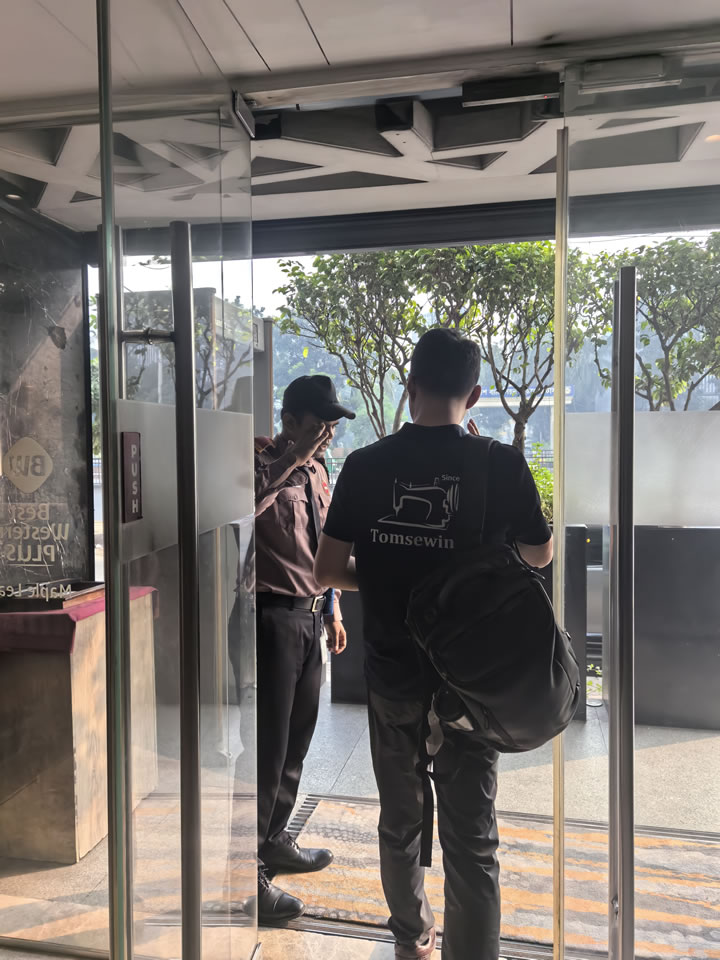
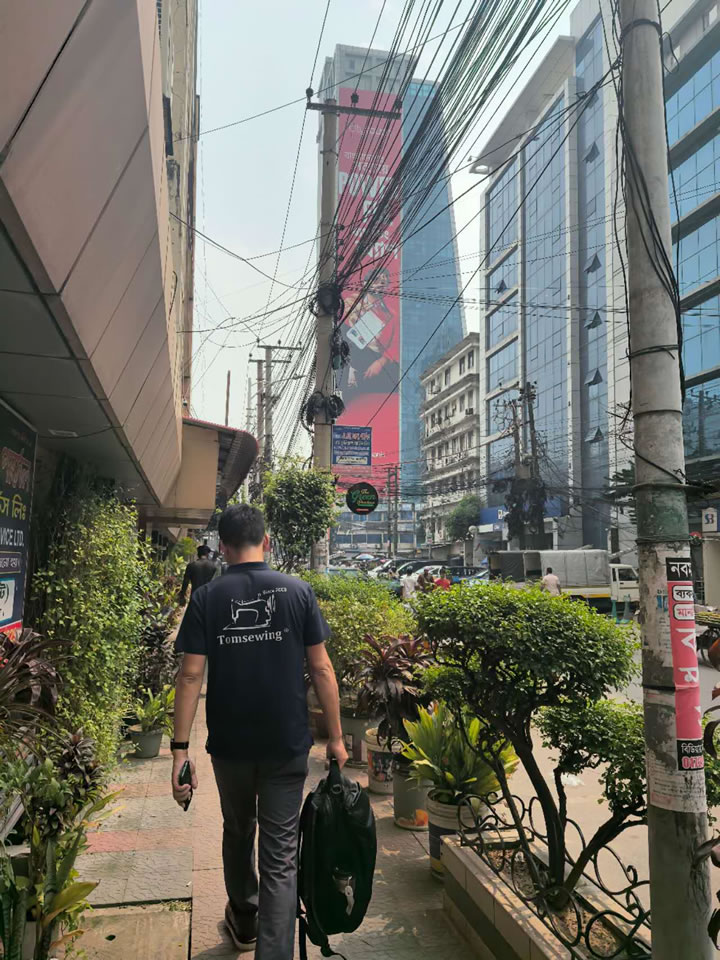
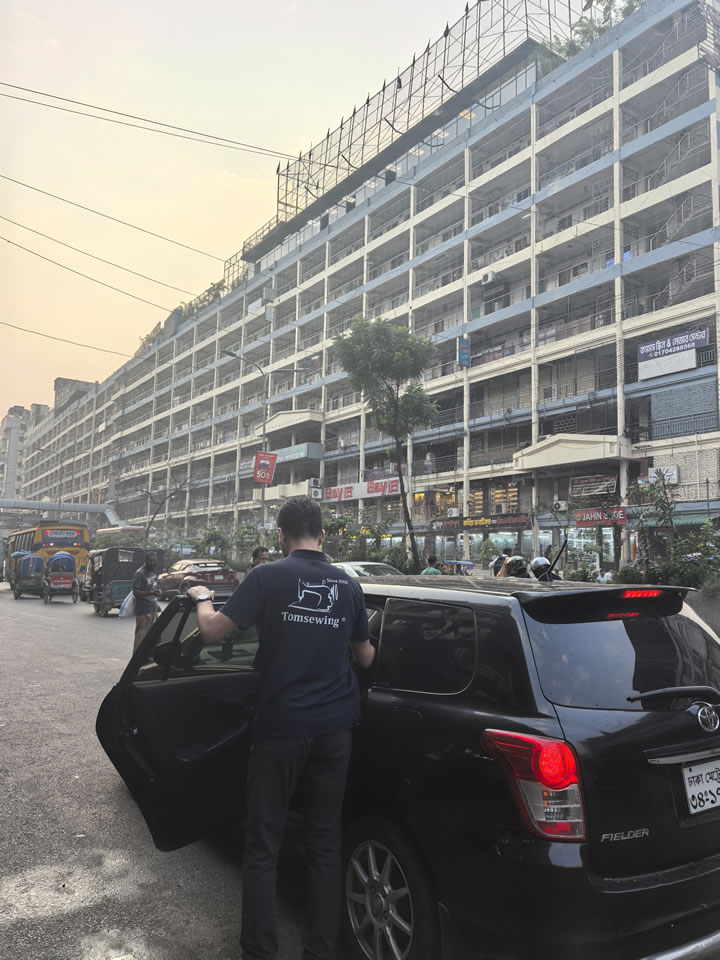
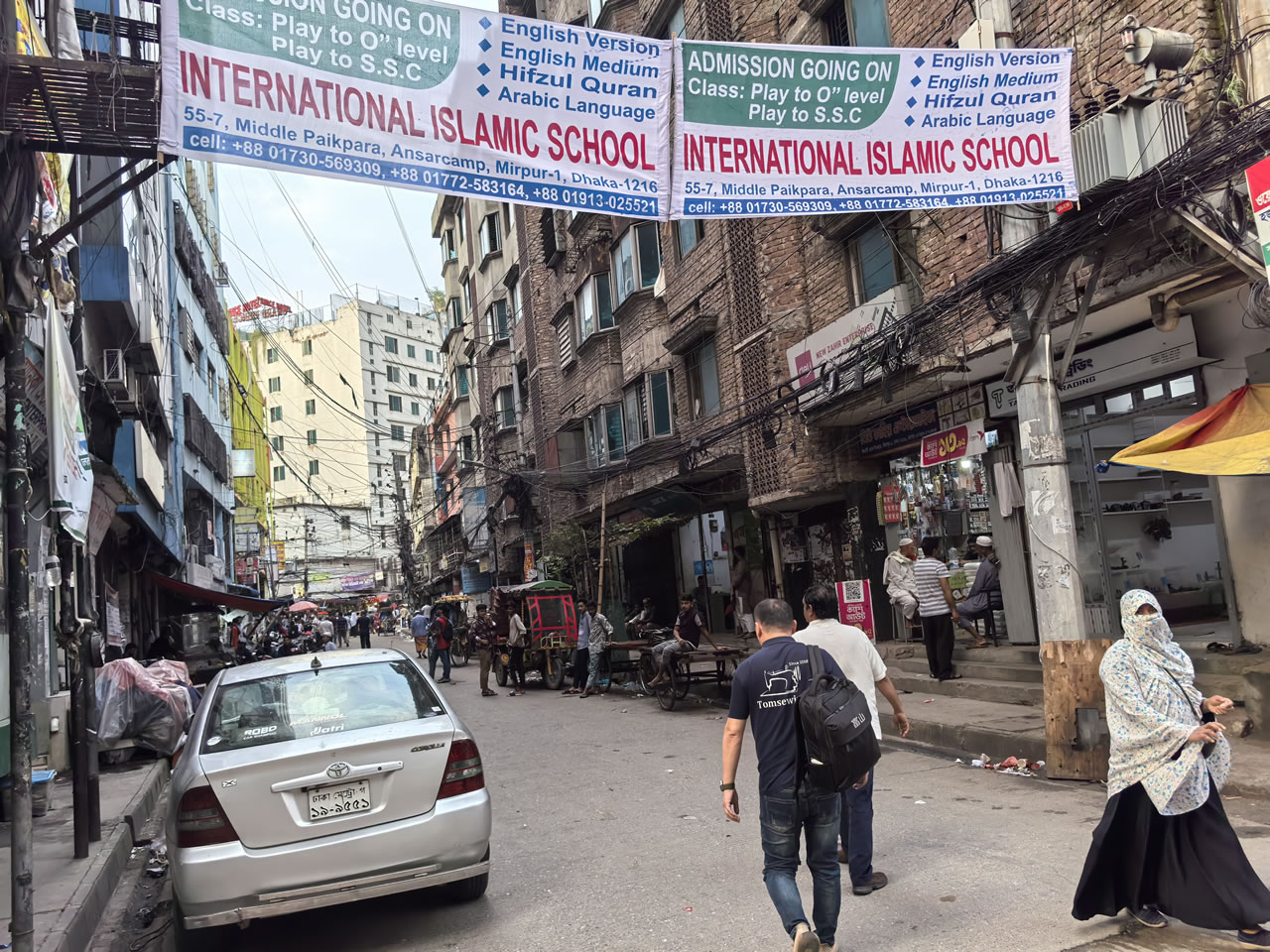
Facing the sunrise at 7:00 AM, my colleagues and I departed from the hotel to begin our journey to the client’s factory. The golden morning light bounced off the chaotic beauty of the streets as we navigated our way out of the city center toward the industrial outskirts.
I had already made a firm appointment with the customer the day before, ensuring that the factory’s plant manager, production head, and chief mechanic would all be available for today’s session. During the drive, my team and I reviewed the factory’s historical throughput data. They were facing rising labor costs, high fabric wastage, and a pressing need to fulfill complex international orders with shorter lead times. The solution wouldn’t be found in a spreadsheet—it required a deep dive on the factory floor.
9:00 AM – Arrival at the Garment Heartland
Upon arrival, we were greeted by the familiar, thunderous roar of thousands of manual and semi-automatic sewing machines. While this sound represents the economic backbone of Bangladesh, to an automation advisor, it also highlights an massive opportunity for optimization.
We quickly met with the factory management team to align on the day’s objective. Today, I will go to the factory to conduct a rigorous on-site inspection and identify the existing problems holding back their operational efficiency.
10:30 AM – The Floor Inspection: Spotting Inefficiencies
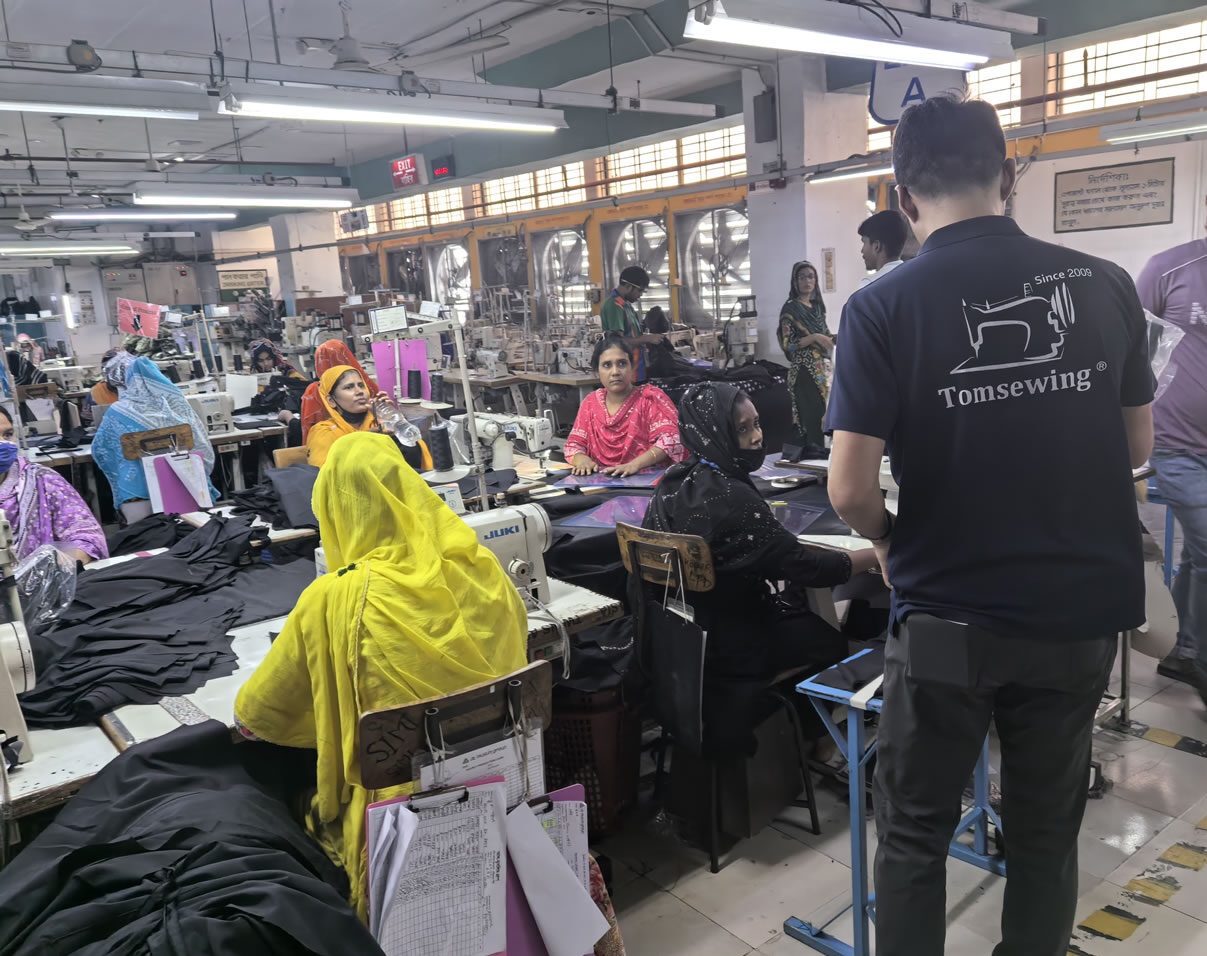
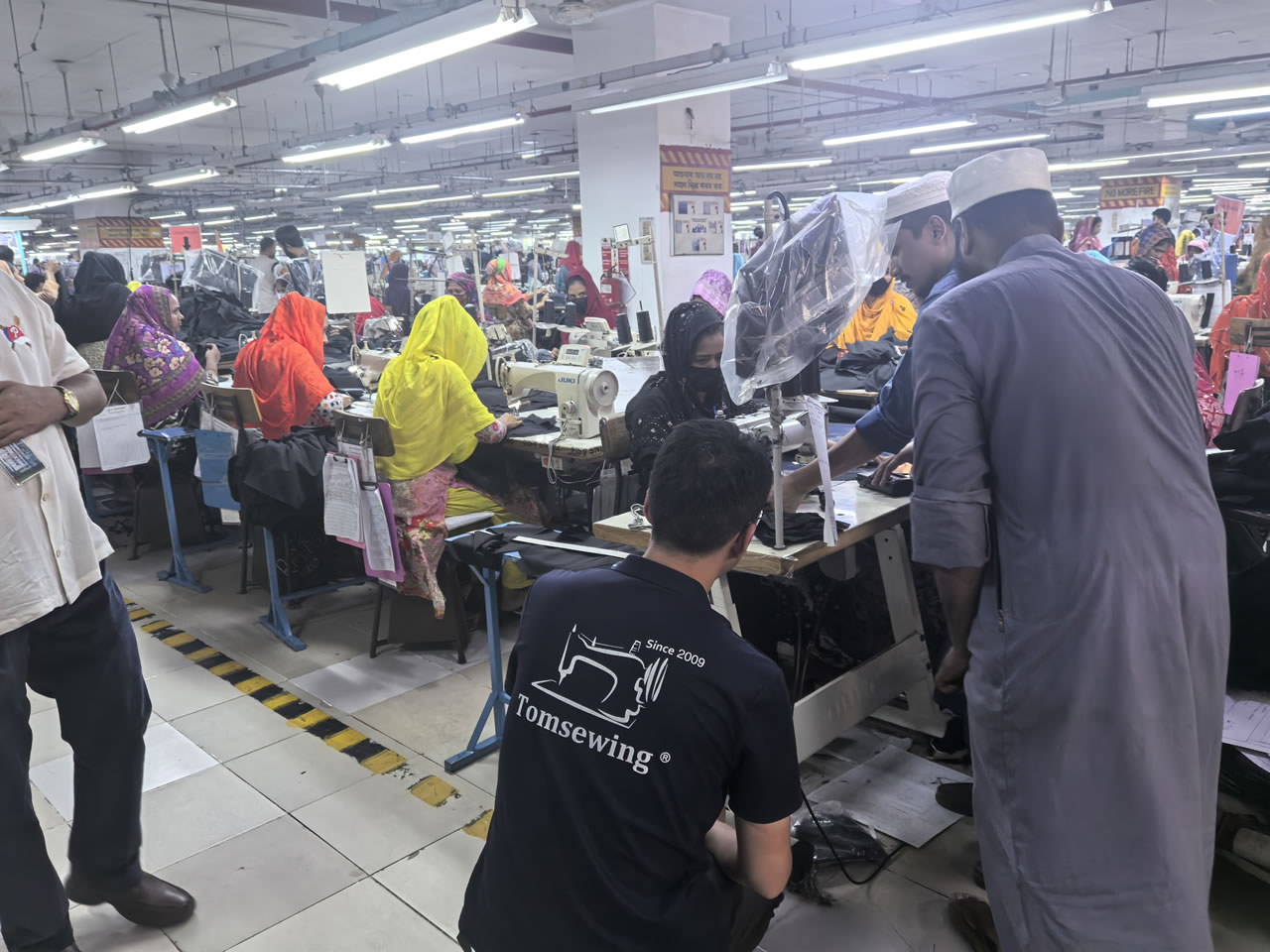
Stepping onto the production floor, we immediately began tracing the assembly lines of a high-volume denim and knitwear order. Walking line by line, my eyes looked past the rapid movement of hands and focused entirely on the mechanics of the process.
It didn’t take long to spot the structural bottlenecks. In the pocket-attachment and collar-stitching sections, operators were spending nearly 40% of their time manually aligning fabrics, marking stitch lines with chalk, and carefully guiding the material under traditional needles. This heavy reliance on manual precision led to significant inconsistencies in stitch quality, a high rate of fabric reject, and severe line balancing issues. Human fatigue toward the end of a shift was directly translating into a spike in defects.
2:00 PM – Designing the Automatic Sewing Machine System Solution
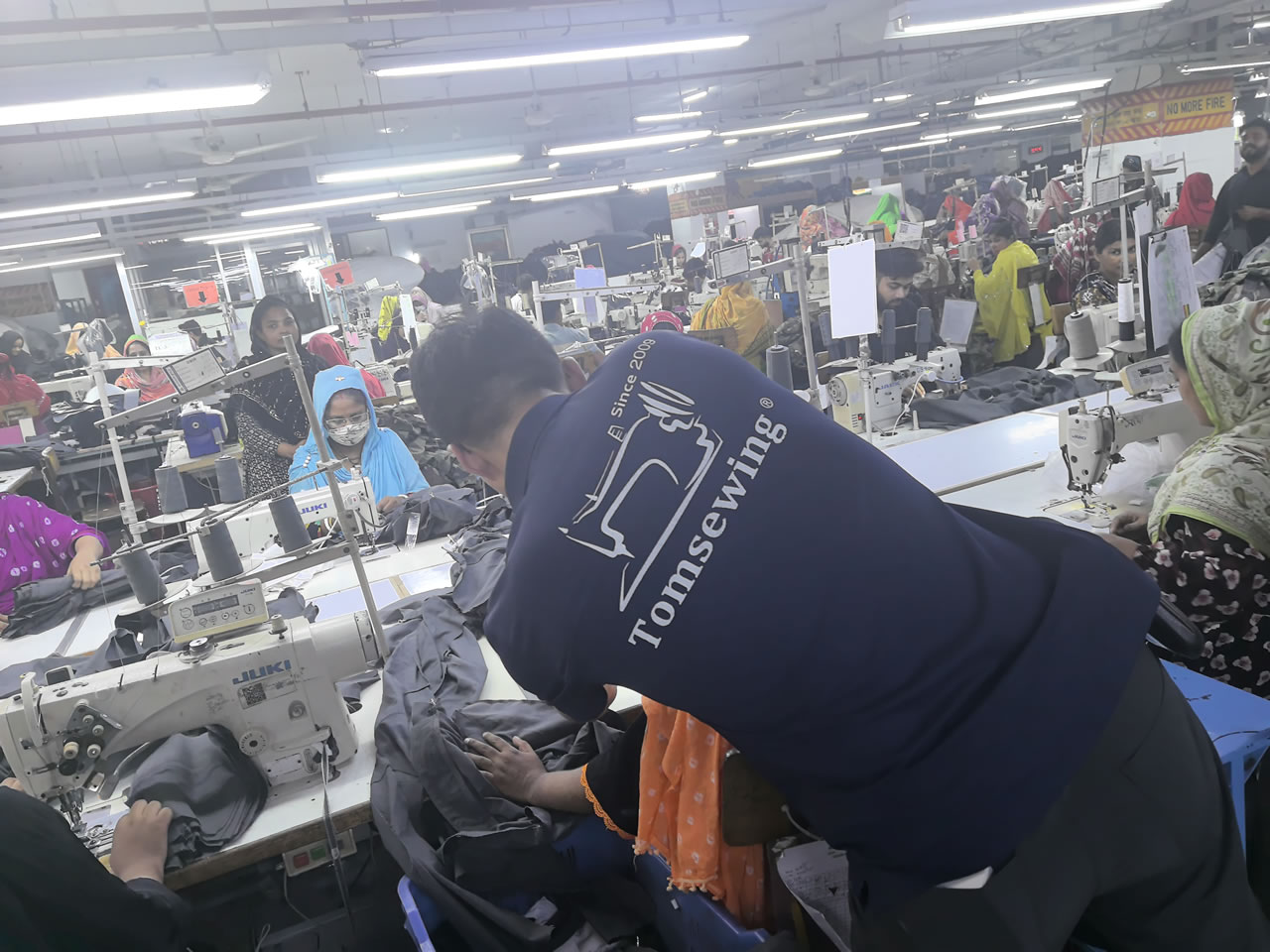
After a brief working lunch, my colleagues and I gathered in the factory’s conference room to map out our diagnostic report. Based on years of production experience, I knew that simply replacing a few old machines with newer versions of the same technology wouldn’t cut it. They needed a paradigm shift.
I began drafting a comprehensive, hardware-and-software integrated automatic sewing machine system solution designed to revolutionize their floor:
- Programmable Template Sewing Machines: For the collar and pocket attachments, we proposed fully automated pattern-sewing units. Instead of manual guiding, the operator simply loads the fabric into a template, presses a button, and the machine executes a flawless, high-speed stitch automatically.
- Automatic Pocket Setters & Welting Units: Introducing specialized automatic units that combine folding, positioning, and sewing into a single seamless operation, instantly turning a multi-person bottleneck into a high-speed, single-operator station.
4:30 PM – Presenting the Automation Blueprint
We presented the system solution to the factory owner and the engineering team, showcasing a digital simulation of how the automated lines would flow. The data spoke for itself. By replacing highly repetitive manual tasks with precision automation, we projected a 35% increase in overall line efficiency, a 70% reduction in defect rates, and an immediate optimization of their workforce.Being an automatic sewing machine business advisor in Bangladesh isn’t just about selling technology; it’s about empowering an essential global industry to become smarter, more sustainable, and ready for the future.
Contact Us Today
Get a premium quotation for your business today!
- Hotline: +86-576-83473717
- WeChat: Tomsewing
- Official Website: Tomsewing
- Watch Our Inspection Videos: Tomsewing YouTube Channel
No responses yet